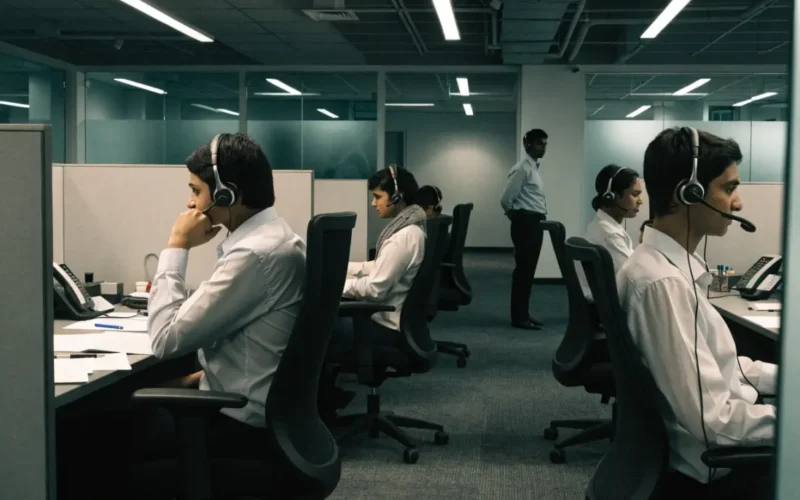

A car or two-wheeler dealership gets three very different kinds of calls on the same number: buyers asking about a model, owners booking a service, and people chasing a spare part or a delivery date. When all of them ring one reception phone, the sales enquiry waits behind a service complaint, and a missed call can mean a buyer who walks into the competing showroom down the road. A small call centre for the dealership fixes this. This guide explains how to set up a car dealership call centre for sales, service and spares, how to handle service booking and reminder calls, and where WhatsApp and AI help without taking the human out of the conversation.
The calls a dealership gets
| Caller | Typical questions | Who should answer |
|---|---|---|
| New buyer | Price, variants, colours, test drive, finance, exchange | Sales consultants |
| Service customer | Book a service, pick-up and drop, status of the car, bill | Service advisors |
| Spares | Part availability, price, order status | Spares counter |
| Existing owner with a problem | Breakdown, warranty claim, complaint | Service manager or customer care |
| Others | Accounts, insurance, RTO, vendors | Reception |
Each group needs its own queue, its own people and its own reports. Mixing them is how sales leads get lost.
Set up the call flow
- One main number, plus department numbers if you have them. Each DID can go straight to its own queue. A number printed on service job cards should land with service, not sales.
- Short IVR on the main number. “Press 1 for new vehicle sales, 2 for service booking, 3 for spares, 4 for anything else.” Keep it to four options. See IVR call flow design.
- A queue per department. In Voxdial Contact Center, each inbound group has its own agents, with priorities from 1 to 9, so a senior sales consultant gets the next call before a trainee. Callers wait with music or announcements about current offers instead of hearing a busy tone.
- Timed steps in the queue. If no service advisor picks up within a set time, call actions can move the call to another group, for example reception.
- After-hours handling. Time conditions play showroom timings and a breakdown number, and offer voicemail.
For dealers with several showrooms and workshops, all locations can share one platform with extensions at every branch. See multi-branch office phone system.
Never lose a sales enquiry
A missed call from a buyer is the most expensive call a dealership can miss.
- Auto callback. Missed calls go to a callback worklist, and Voxdial can call them back within a window you set, so a consultant speaks to the buyer the same day.
- Lead forms. When a sales call connects, the agent fills a short lead form with custom fields such as model of interest, budget, exchange vehicle and preferred test drive date.
- Dispositions. Every call ends with an outcome such as “Test drive booked”, “Quotation sent” or “Not interested”, so managers can see the funnel. See call disposition codes.
- CRM or DMS on screen. The agent console can open your CRM in a tab with a screen pop and click to call, so consultants don’t copy numbers by hand. See click to call CRM integration.
Follow-up calls to leads should come from consultants working a list one call at a time, at times that suit the customer, and only to people who asked to be contacted. Lead management in a call centre covers lists and recycling.
Service booking and reminder calls
Service is where dealerships earn steady revenue, and most of it starts with a phone call or a reminder.
- Booking calls go to service advisors, who check slots and confirm pick-up and drop.
- Service due reminders work best on WhatsApp first: an approved Utility template with the vehicle, the due service and a button to book. Customers can reply in the same chat. See WhatsApp template messages.
- Calls from advisors follow for customers who did not respond, from a worklist, one call at a time.
- Vehicle ready updates go out on WhatsApp with the bill as a PDF, which cuts down the “is my car ready?” calls on busy days.
All WhatsApp chats land in one shared inbox on BitVoice’s Social Media Platform, and agents can also take WhatsApp calls in the same queues as phone calls.
Where AI fits
Weekend mornings and the first week of a festive offer bring call spikes. A BitVoice AI voice agent can answer only when every consultant or advisor is busy, or after hours, in 22 Indian languages. It can take the caller’s name, model of interest or service need and preferred time, then hand back to the next free person with a summary. The customer still deals with your team for anything that matters: prices, negotiation, complaints.
Measure and improve
- Missed and abandoned calls by department, daily. Sales should be close to zero.
- Callback completion: how many missed buyers were called back the same day.
- Dispositions per consultant: test drives booked, quotations sent.
- Service bookings from reminders, by channel.
- Recorded calls reviewed weekly for quality, with silent listen and whisper for coaching new staff.
Want every sales and service call at your dealership answered and tracked? Talk to BitVoice.
FAQs
Does a dealership need a call centre?
If one reception phone takes sales, service and spares calls, yes. Even three or four people in separate queues with an IVR, auto callback and reports stop leads and service bookings from being missed.
How do I make sure missed sales calls are called back?
Missed calls go into a callback worklist and can be called back automatically within a time window you set, so a consultant reaches the buyer the same day.
Should service reminders be calls or WhatsApp messages?
Send a WhatsApp reminder first with a button to book, then have advisors call only those who did not respond. It saves time and annoys fewer customers.
Can several showrooms and workshops share one system?
Yes. Branches can share one platform with their own extensions and queues, and calls can move between locations as needed.