A VoIP gateway connects telephone equipment that speaks analog or TDM to a network that speaks SIP. It is the box that lets an office move to an IP PBX without throwing away every phone, fax machine and phone line on day one. This guide explains the main types of VoIP gateway, how to size one, and what to check on the datasheet before you buy.
What does a VoIP gateway do?
On one side a gateway has telephone ports. On the other it has an Ethernet port. It converts between the two: analog voice and ring signals become SIP calls and RTP audio on the network, and the other way round. To the IP PBX, every telephone port on the gateway looks like a normal SIP extension or trunk.
Types of VoIP gateway
| Gateway type | Ports | What it connects | Typical use |
|---|---|---|---|
| FXS gateway | RJ11 FXS ports | Analog phones, fax machines, door phones | Keep existing handsets as IP PBX extensions |
| FXO gateway | RJ11 FXO ports | Analog lines from a telephone operator | Bring old landlines into an IP PBX |
| E1 / PRI gateway | E1 ports | Digital PRI lines, or an old TDM PBX | Connect PRI lines or link an old EPABX to a new IP PBX |
Most offices moving from an EPABX need FXS ports, because the phones on every desk and in every room are analog. That is what an analog VoIP gateway such as the BitVoice BVS1000 does. For phone lines, read SIP trunks in India and PRI to SIP migration.
How many ports do you need?
Count every analog device that must keep working: desk phones, room phones, fax machines, lift and door phones, and alarm diallers. Add 10 to 20 percent for growth. Then choose between:
- One large gateway in the server room, with long analog cables to each room. Simple to manage, and works well when the old cabling already runs to one place.
- Several smaller gateways, one per floor or building, placed near the phones. Shorter analog runs, and one failed unit affects fewer people.
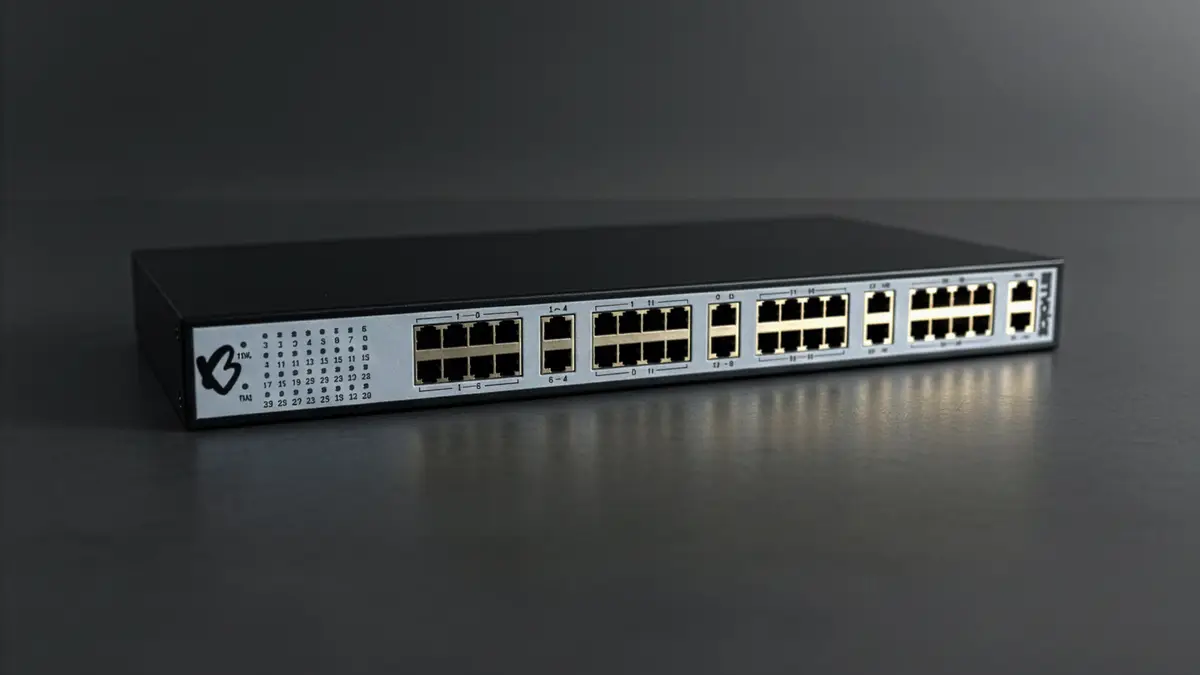
BitVoice makes an 8 port gateway for smaller sites and the BVS1000 Series with 16, 24 or 32 ports in a 1U rack unit, on modular boards so ports can be added later.
What to check on the datasheet
- Analog line length: long runs in factories and campuses need a gateway rated for them. The BVS1000 supports up to 3 km on 24 AWG cable.
- Ring load (REN): how many phones one port can ring at once. Check it before putting two handsets on one line; the BVS1000 supports a 2 REN ring load.
- Fax support: look for T.38. Without it, fax over IP often fails. See fax over IP with T.38.
- Codecs: G.711 for best quality on the LAN, G.729 where bandwidth is tight, G.722 for HD voice.
- Caller ID: DTMF and FSK caller ID, so analog phones with displays show the caller.
- Management: auto provisioning from your IP PBX matters most once you have more than one gateway; SNMP and TR-069 help with monitoring.
- Certification: for government, PSU and many enterprise tenders in India, telecom equipment must be TEC certified under MTCTE. All BitVoice analog gateways, from 8 to 32 ports, are TEC certified. Read what TEC certification means.
Common mistakes
- Buying FXO ports when you need FXS (or the other way round).
- Leaving the gateway’s default admin password unchanged.
- Forgetting fax machines and lift phones in the port count.
- Running gateways without a UPS: when power fails, every analog phone on it goes silent.
Gateways with Voxdial IP PBX
The Voxdial IP PBX auto provisions BitVoice gateways. It finds the gateway on your network, you map each analog port to an extension, and Voxdial generates and pushes the configuration, so nothing is typed into the gateway’s own web interface. Every port then shows on the deployment map as registered or offline, and a resync updates the gateway without a reboot. The full steps are in using analog phones with an IP PBX and auto provisioning.
Planning a migration with analog phones? Talk to BitVoice for a site survey and gateway sizing.
FAQs
What is a VoIP gateway used for?
It connects analog phones, fax machines or phone lines to a VoIP network, so they work with an IP PBX as SIP extensions or trunks.
What is the difference between an FXS and an FXO gateway?
An FXS gateway connects analog phones and fax machines. An FXO gateway connects analog phone lines from a telephone operator.
Do I need a TEC certified VoIP gateway?
For many government, PSU and enterprise tenders in India, yes. BitVoice analog gateways with 8, 16, 24 and 32 ports are TEC certified under MTCTE.
Can a VoIP gateway work with any IP PBX?
A standard SIP gateway works with most SIP-based IP PBX systems. The BitVoice BVS1000 works with the Voxdial IP PBX and other SIP platforms.